Yes, I Used Artificial Intelligence to Make My Book Cover
For my first book, I made a cover in Canva. It was… okay. I thought it was clever, even. But after a few months, I realized that I had made a mistake. It was bland. Being a creative is great, but if you want to be a successful creative, you have to know how to brand and market your work. Your title needs to be interesting. Your cover (if you’re an author) has to draw eyes. So I re-did the cover for Earning My Ears. I had a vision for the cover that included me and the Walt Disney World Monorail. I hired professional comic book artist Tim Lattie (The Real Ghostbusters, Teenage Mutant Ninja Turtles, He-man and the Masters of the Universe) to create the image and then I used Canva to make a new cover. It came out fantastic.
Not long after, I decided to publish a second book. My first was a memoir of my time in the Disney College Program. My second book would be an anthology of many of my short stories. Most fictional, some true.
For Lies We Tell Ourselves, I had a specific vision for the book. I wanted it to look like an old, worn pulp novel from the 60s.
Now, here was the problem. I have a lot of friends who are incredible artists. But none of their styles matched what I was looking for. There is a fairly famous artist in Mississippi who I knew would have an extremely generous price and would, I believed, be great for my vision. Unfortunately, he’s a bit of a recluse and stopped returning my cools. Artists; go figure.
I also found an incredible artist who would do it for $500. To be clear, this is a more than reasonable price for his services. But I just couldn’t justify it for a self-published book of short stories.
On a lark, my mind went to Grok, the Artificial Intelligence program created by Elon Musk. I’d been paying for Twitter/X and Grok comes with it. Up until then, I’d never used Grok to make images. I mostly used it as a tool to quickly and methodically gather information. For that, it was great.
But it does more than that. So I thought, what the hell. Why not see what kind of book cover it comes up with?
For my first prompt, I told Grok I wanted an image of a woman from an old pulp romance novel. And, honestly it was fantastic. I was very close to using that cover. It was good enough, but it wasn’t perfect.
For my second prompt, I told it I wanted a book cover titled Lies We Tell Ourselves, in the style of an old pulp noir book. It should look old and worn.
And out came this. (Or rather, the base of this. I’ve added text.)
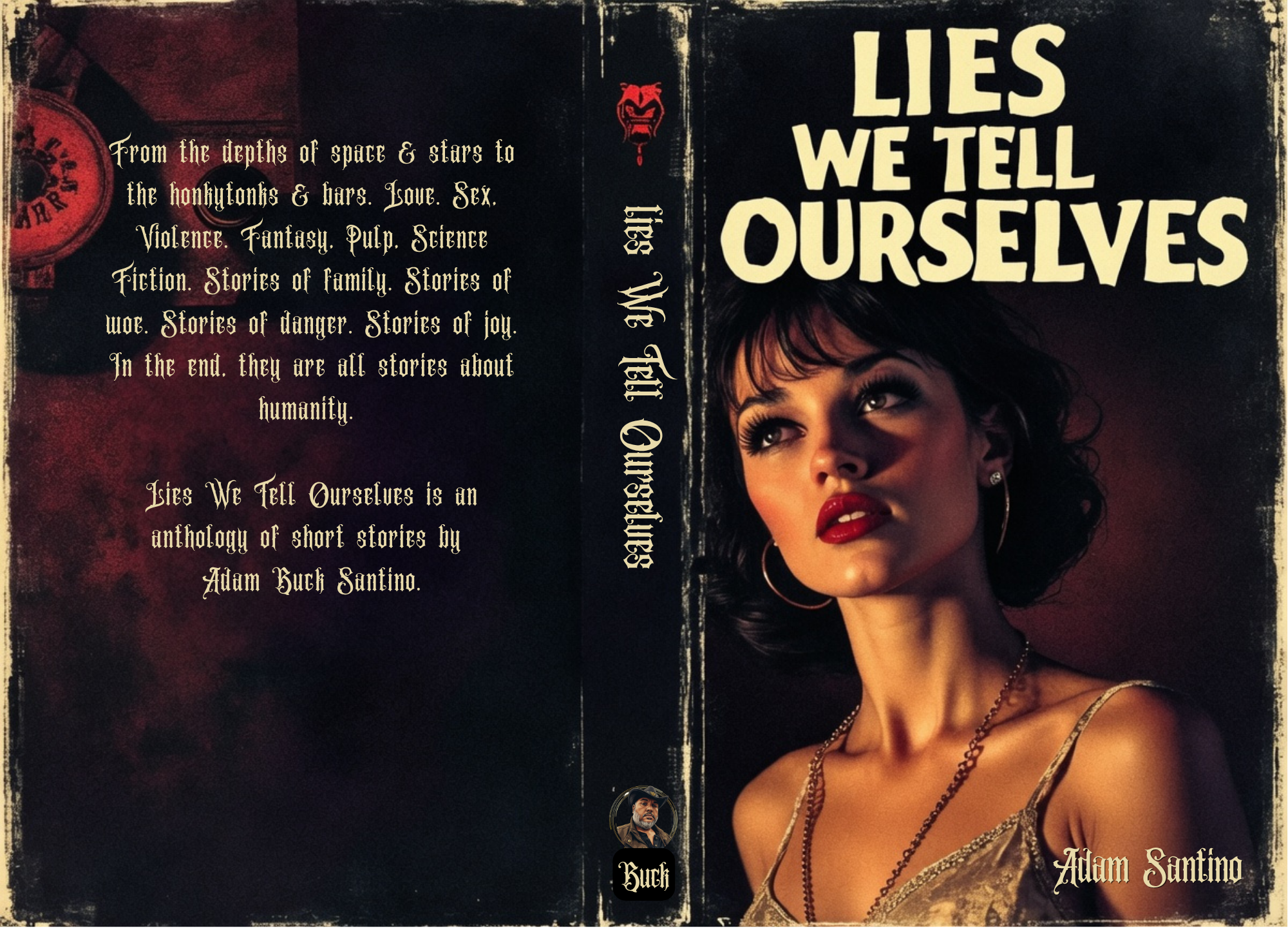
It was unbelievable. And perfect. Better than I could have imagined.
I have friends who are beating the drum of ending AI. And I get it. AI is going to end a lot of jobs, especially in the creative space. It has already started happening.
But as a photographer, this is nothing new. The rise of the iPhone and cellphone photography has certainly affected lower end shooters. Everyone thinks they’re a photographer now. Why should they hire you? And depending on what you’re trying to do and what you can afford, you may be right.
And then as a self-published writer, I’ve seen the effect artificial intelligence has had on that space. There is now a cottage industry of people using AI to make books for them- by the thousands and publishing on platforms like Amazon. Most of these book are considered low content (journals, puzzle books, etc), but they’re still flooding the market. And not all of them are low content. On the night Charlie Kirk was assassinated, I saw no less than three books about his death on Amazon. This is mere hours after his death. Obviously these were written by AI.
So I get it. I get the anger and the resistance.
To that I say, tough noogies.
This is the world we live in.
First of all, a lot of things that companies are calling AI, are frankly not. They’re merely the next evolution of the tools they were already working on, but marketed as AI because it makes people think they’re futuristic.
Secondly, corporations are not going to stop developing this technology. In fact, this is the definitive technological arms race of our lifetime. So you have two options. Either learn how to use artificial intelligence ethically, as a tool that can make you life and workflow easier… or get left behind and make your art for yourself.
I’m not giving up my integrity as creator, but I also have no interest in standing on a soapbox while the world passes me by. If you do, cool. I support your decision and I hope you’re successful.
But I don’t feel bad about learning how to play the game, as long as I play it my way.